
|
||||||
|
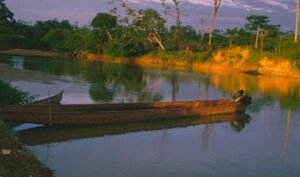
Darkness in a sunburned jungleThe struggle of one patient, one family, one village, one nationBy Sal CapoDr. Ana Maria Abreu-Velez remembers Arturo Ramírez (Names changed for privacy) as a very sweet man who was always on time for his appointments with her. He always wore a clean shirt, a wide smile and a big hat to protect him from the relentless sun that is synonymous with the jungles of El Bagre, Colombia in South America, where he and his family of Indian Natives lived. Arturo suffered from what the scientists call endemic pemphigus foliaceus (EPF). It stalks Colombia like the deadly Coral snakes frequently found in the jungle.
Dr. Abreu-Velez is a native of Colombia and in 2002 was doing research supported by a number of local, state and international agencies. She now teaches and conducts research into the causes of autoimmune skin diseases at the Georgia Medical College in Augusta, Georgia. A clean shirt and an unfailing on-time record are rare in the jungle. They demonstrate just how much Arturo valued his visits with Dr. Abreu-Velez, who did what she could to treat his illness with the woefully inadequate medical facilities and supplies available. He was cautioned to stay out of the sun, which is known to aggravate the disease, but this was simply an impossible request. This disease is a persistent, painful, tragic and ongoing mystery. Among many mystifying facts are that, unlike pemphigus everywhere else in the world, EPF is far from a rare disease. It is found in up to 30% of some villages, and frequently runs in families. In fact, EPF had already claimed Arturos brother, two brothers-in-law and many others of Arturos Zenu Indian tribe. EPF is mystifying for other reasons. Like pemphigus, genetic markers are found in many people; but in spite of all the tools of science and decades of study by scientists, no one has a clue about what triggers the lesions that eventually cover a patients body. Antibodies of EPF are found in the blood up to 7 years in advance of the outbreak of blisters, but nothing under the sun can stop them. It is most likely caused by something in the environment, because patients who leave the endemic areas recover, and those who return suffer relapse. When I came to the United States in 2002, I had about 150 active cases (of endemic pemphigus), plus about 600 relatives and hundreds of controls (people without signs of the disease) in the community. In my private practice and at the hospital, I was able to bring together almost a hundred patients with pemphigus, pemphigoid and other genetic and acquired blistering diseases. All these people became part of our pemphigus family,' said Abreu-Velez. There are so many stories about families like Arturos; many are not easy to tell. Many are very, very sad. They are such nice people, so honest; and they, their families and the community fear all kinds of obstacles, but they have such big hearts. In the middle of hopelessness, they show each other such great love and courage. I pray someday, as God wills, I will be able to return to Colombia and continue my work. I hope to obtain support in America, and continue my research to help more people all over the world who suffer from these diseases. I also want to create a school dedicated to autoimmune disease, staffed with compassionate doctors and researchers who will devote their lives to research and care of patients. Arturo died in a hired car in 1999 while returning from the nearest medical facility in Caucasia, many hours away. Arturo was told to leave the area to protect his life, but this is much easier said than done in the jungle. There are 15 children and grandchildren in Arturos extended family. EPF antibodies have been detected in the blood of two of his sons. They must remain in the infected area to care for what Dr. Abreu-Velez calls a neat and clean farm that supports the family. She remembers the boys as two very hard workers, with two wide smilesand two big hats. To date, Dr. Abreu-Velezs has been unable to secure funding to continue her research, or for a website to publish her work. The PPS has offered her unlimited space on our website, and she has accepted our offer, so my research will be available to everyone in the world, for free.
|
||||||


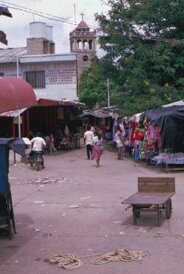 In the village marketplace.